


Ostesosarcoma is the most common primary bone cancer, which primarily occurs in adolescents and young adults and has dismal outcomes despite years of therapy intensification. Immunotherapies have thus far been ineffective in this disease. We are studying a genetically engineered mouse model of osteosarcoma (Trp53fl/flRbfl/fl Sp7-Cre) to understand the barriers to an effective immune response and potential therapeutic strategies. We approach this from a couple of perspectives: First, focusing on the cancer cells, we use high depth next generation sequencing to characterize the complex genomic rearrangements in these tumors and identify potential novel antigens. With this information, we collaborate with Dr. Alex Jaeger’s lab (Moffitt Cancer Institute) to perform immunopeptidomics and define the MHC-presented peptidome. Second, to probe barriers from the T-cell perspective we use flow cytometry, single-cell RNA and TCR sequencing and TCR retrogenics to characterize the T cells that do respond to these tumors and understand which inhibitory pathways are active. When combined, we anticipate these approaches will generate new therapeutic strategies for this understudied disease.
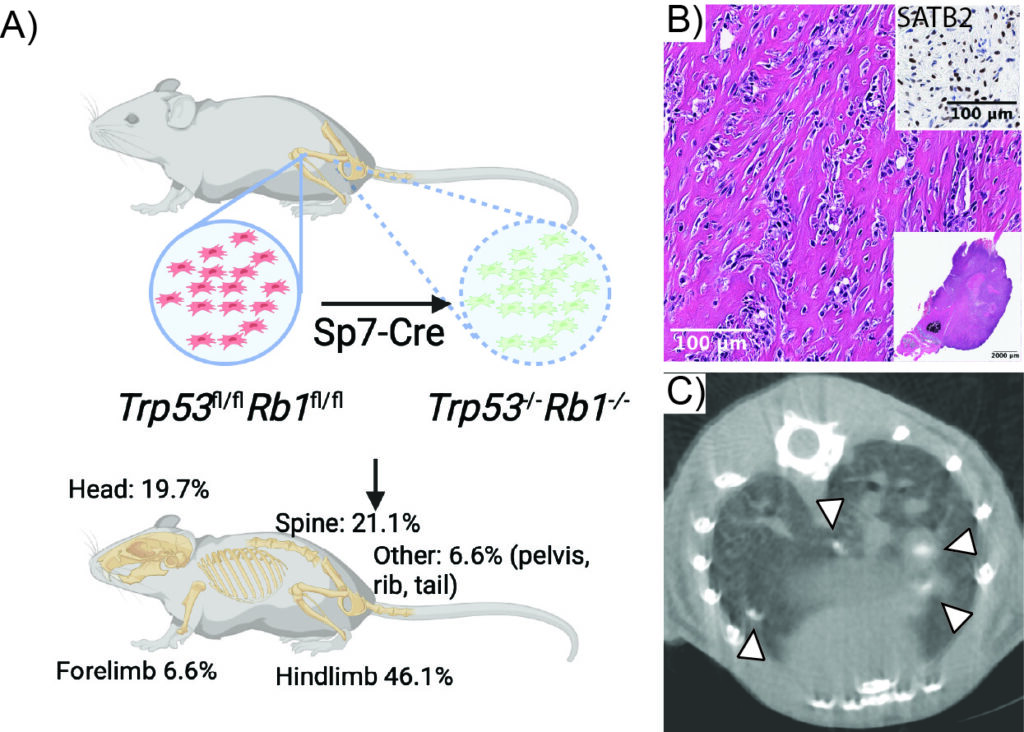
(A) Autochthonous model of murine osteosarcoma (B) H&E and SATB2 IHC (inset) of murine osteosarcoma. (C) uCT showing metastatic osteosarcoma lung nodules. Figure was created by Geoff Smith.