


The Jacks Lab is interested in the genetic events contributing to the development of cancer. The focus of our research has been a series of mouse strains engineered to carry mutations in genes known to be involved in human cancer. We also study the effects of these mutations in transformed cells and use cells derived from mutant animals to study the function of these genes in organoid models. Current research remains centered on the use of gene targeting to create more powerful and accurate mouse models of human cancer and to explore the pathways regulated by cancer-associated genes. We have generated mouse models of several major human cancer types, including lung cancer, pancreatic cancer, osteosarcoma, and colon cancer. The mouse models are being evaluated with cutting-edge tools in genetics, genomics, and imaging, as well as with various chemotherapeutic agents.
-
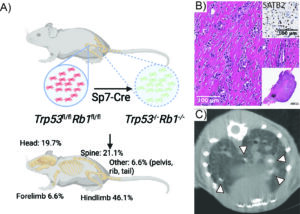
Osteosarcoma
Identifying novel antigens to develop immune therapies to treat osteosarcoma.
-
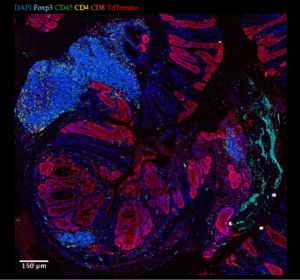
Colorectal Cancer
Understanding how common injuries to the colon influence cancer initiation and progression
-
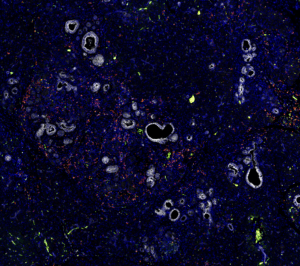
Pancreatic Ductal Adenocarcinoma (PDAC)
Characterizing PDAC cancer evolution and progression using sophisticated mouse models to further understand the tumor microenvironment and improve treatments.
-
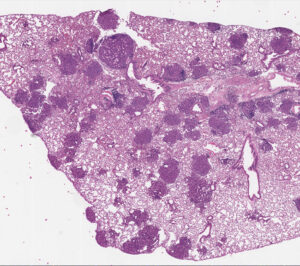
Lung Adenocarcinoma
Determining factors that influence the tumor-associated immune response during lung cancer progression.
Funding Credit
Our studies are also supported by the National Institutes of Health, the Ludwig Fund for Cancer Research, the Lustgarten Foundation, and the Koch Institute for Integrative Cancer Research. Prof. Jacks is a Daniel K. Ludwig Scholar and the David H. Koch Professor of Biology at MIT.